

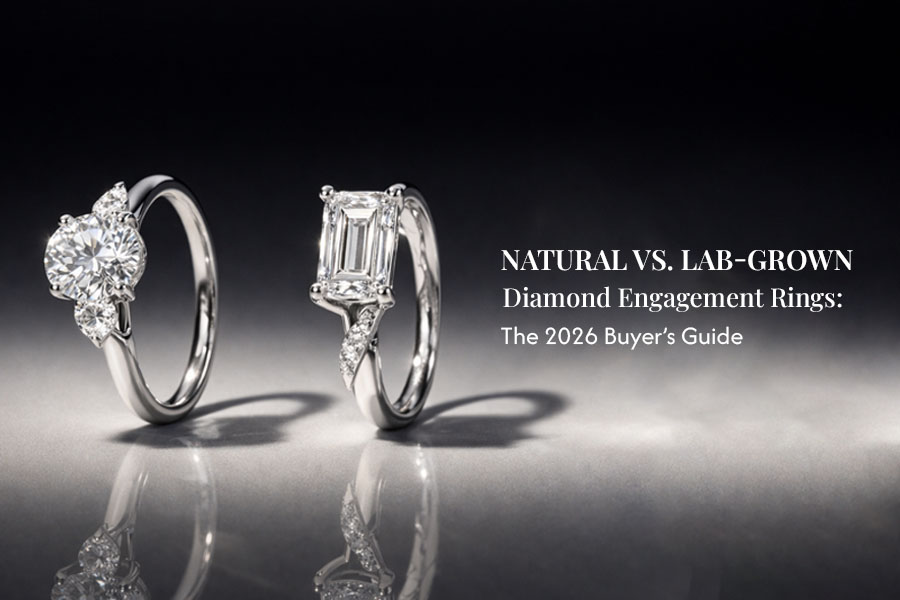
Natural vs. Lab-Grown Diamond Engagement Rings: The 2026 Buyer’s Guide
Engagement rings represent commitment, love, and timeless beauty. In 2026, couples are increasingly focused on finding the perfect diamond, yet many find themselves choosing between natural and lab-grown options. This decision often comes down to sustainability concerns, budget considerations, and specific design preferences.
In Indianapolis, the engagement ring shopping experience has evolved significantly. Buyers today are focused on a blend of tradition, innovation, and long-term value. This creates a unique balance between natural diamonds, which symbolize heritage and rarity, and modern lab-grown diamonds, which prioritize sustainability and affordability.
To choose the right ring, you must understand the differences between lab-grown stones and Certified Natural Diamonds. By weighing your budget, ethical beliefs, and aesthetic preferences, you can confidently invest in the most special jewelry piece of your life.
Natural vs. Lab-Grown Diamond Rings: Comparison Table
|
Feature |
Natural Diamond |
Lab-Grown Diamond |
|
Origin |
Formed naturally over billions of years |
Created in a controlled laboratory |
|
Optical Properties |
Authentic diamond sparkle |
Identical brilliance and fire |
|
Certification |
GIA, IGI, or SGL |
GIA, IGI, or SGL |
|
Price |
Premium pricing |
40% to 70% lower than natural |
|
Ethics |
Traditional mining |
Ethical and Eco-friendly |
|
Resale Value |
Higher traditional market value |
Emerging and evolving |
Chemical Properties of Lab-Grown Diamonds
Lab-grown diamonds have become a staple in modern engagement and wedding jewelry. Because they share the same physical and Chemical Properties of Lab Grown Diamonds as mined stones, they offer a way to enjoy luxury without environmental compromise.
- Pure Carbon Composition: Lab-grown diamonds consist of carbon atoms arranged in a crystal structure, which is the exact same composition found in nature.
- Crystal Lattice Structure: The carbon atoms are bonded in a strong, three-dimensional pattern, providing the exceptional strength and brilliance diamonds are famous for.
- Hardness: These diamonds rank 10 on the Mohs hardness scale, making them the hardest material used in jewelry today.
- Optical Brilliance: They exhibit the same light dispersion and refractive properties as natural stones.
- Advanced Production: Created using Chemical Vapor Deposition (CVD) or High Pressure High Temperature (HPHT) methods, these diamonds mimic the natural formation process.
- Sustainability: Because they are produced in a controlled environment, they are a hallmark of Eco-friendly Jewelry, requiring no mining or land disruption.
Natural Diamonds: Rarity, Heritage, and Legacy
The rarity and legacy of natural diamonds make them a unique choice for many Indianapolis brides.
- Rarity and Appeal: Ethically Sourced Natural Diamonds are limited by nature, which helps them hold their value over time.
- Resale and Investment: Due to the Investment Value of Diamonds, natural stones are generally easier to resell in traditional markets than lab-grown alternatives.
- Heirloom Potential: Natural diamonds are the classic choice for jewelry intended to be passed down through generations as a family legacy.
The Rise of Lab-Grown: Brilliance and Value
Lab-grown diamonds are a top choice for those seeking a larger carat size without the premium price tag.
- Superior Affordability: These diamonds typically cost 30% to 60% less than natural stones of the same quality, allowing you to maximize your budget.
- Larger Carat Weights: This lower price point means you can choose a much larger center stone while staying within your financial goals.
- High Clarity and Color: Because they are grown in controlled environments, it is often easier to find lab-grown stones with fewer internal inclusions and higher color grades.
IGI and GIA Certified Diamonds
Regardless of which diamond type you choose; professional grading is essential. IGI and GIA Certified Diamonds provide you with a detailed report on the "Four Cs" (Color, Cut, Clarity, and Carat Weight) and offer authenticity assurance.
- IGI (International Gemological Institute): Frequently used for lab-grown diamond grading, providing detailed growth method and quality analysis.
- GIA (Gemological Institute of America): The world’s most trusted authority for natural diamond grading, known for the strictest standards in the industry.
Diamond Price Comparison 2026
|
Diamond Type |
Carat Weight |
Average Price (2026) |
Certification |
|
Natural Diamond |
1 Carat |
$5,500 to $8,000 |
GIA Certified |
|
Lab-Grown Diamond |
1 Carat |
$1,800 to $3,000 |
IGI Certified |
|
Natural Diamond |
2 Carat |
$18,000 to $25,000 |
GIA Certified |
|
Lab-Grown Diamond |
2 Carat |
$4,500 to $7,000 |
IGI Certified |
Styling the Choice: 14K Gold Settings & Silhouettes
The metal you choose plays a vital role in the overall appearance of your ring. Many couples prefer 14K gold because it offers the perfect balance of beauty, durability, and affordability.
- 14K White Gold Solitaire Rings: This is a top choice for modern couples. The bright white finish enhances the sparkle of a colorless diamond for a contemporary look.
- Yellow Gold Engagement Rings for Women: We are seeing a massive surge in demand for yellow gold due to the "old money" and vintage trends of 2026.
- 14K Gold Durability: Because 14K gold is mixed with stronger alloys, it is more resistant to scratches than 18K or 24K gold, making it ideal for an engagement ring you wear every day.
- Custom Designs: According to recent Engagement Ring Trends Indianapolis data, customers love creating unique pieces by choosing specific shapes and setting styles.
Which is Better for You?
Choose Natural Diamond Engagement Rings if you value tradition, rarity, and the potential for long-term investment.
Choose Lab-Grown Diamond Engagement Rings if you want the largest, most brilliant stone possible for your budget or if eco-friendly production is your top priority.
Where to Buy the Best Engagement Rings in Indianapolis?
Deciding between diamond types is a deeply personal journey. At Sam’s Jewelers, we are committed to helping every client find Affordable Lab Grown Diamonds ring in Indianapolis or rare natural stones that fit their unique story.
We invite you to visit us at our Castleton Square Mall location. Our experts are here to show you both options side-by-side so you can see the brilliance for yourself.
Note: We are a locally owned, independent business. We are not affiliated with any other business sharing the same name.
Conclusion
Whether you choose a lab-grown stone or a natural diamond, your ring should reflect your love story and align with your values. To find your perfect match, we suggest you Shop 14K Gold Bridal Jewelry, compare certifications, and explore various styles before making your final decision. At Sam's Jewelers, we pride ourselves on providing stunning options that reflect your lifelong commitment.


