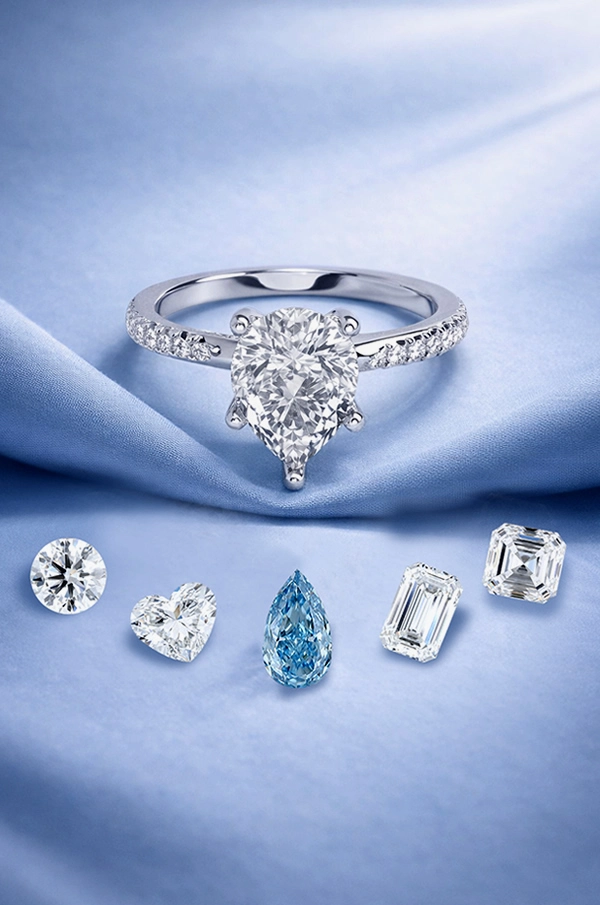
Diamond Cut
The Mastery of Light and Reflection
While nature determines a diamond’s color, clarity, and carat weight, the Cut is the only element of the 4Cs that is directly controlled by human hands. Cut, the most complex and technically demanding of the 4Cs, is assessed by looking at the diamond’s facets and how well they interact with light.
At Sam’s Jewelers, we often tell our customers that a diamond’s journey begins deep within the Earth. The cutter’s expertise, however, is what truly brings the material to life. As a premier jewelry shop in Indianapolis, we adhere to the GIA (Gemological Institute of America) grading system to evaluate how masterfully a stone has been fashioned.
This guide will provide you with the expertise needed to shop for round brilliant diamonds or order custom jewelry that radiates with maximum brilliance.

What is Diamond Cut?
Clarity is the relative absence of inclusions and blemishes. Inclusions are materials trapped inside the diamond or structural imperfections such as tiny crystals, clouds, or feathers. Blemishes, on the other hand, are external features like scratches or nicks that may occur during the cutting process or through daily wear.
A diamond’s cut grade is a measure of how successfully the stone handles light. When a diamond is cut to the correct proportions, light enters through the top (the table), reflects off the internal facets, and returns to the eye in a spectacular display of sparkle. If the cut is poor, the light leaks out the bottom or sides, leaving the stone looking dull and dark.
The Three Components of Visual Beauty
The GIA evaluates a diamond’s “face-up” appearance based on three distinct optical effects. These are the qualities you should look for when you shop for round brilliant diamonds.
Brightness
Brightness is the result of both internal and external reflection of white light. A diamond that is cut well appears bright and lively because it reflects the most of the light back to the viewer.
Fire
When white light spreads out, it breaks up into beautiful colors that make a rainbow. When light hits the sides of a diamond, it makes a “prism effect,” which splits the light into different colors, like red, blue, and yellowish, which is what fire is.
Scintillation
The light and dark patterns created by reflection on the inside of a diamond are called scintillation; this is what you see when you see the “sparkly” or “twinkling” nature of a diamond when it or its light source moves. An even balance of scintillation is important for a beautiful diamond.
The Anatomy of a Round Brilliant Diamond
The standard round brilliant diamond is the only cut that receives an official GIA cut grade because its facets are standardized. Every round brilliant has 57 or 58 facets, and each part of the stone plays a role in its light performance.
Table:
The table is the large, flat surface at the top of the diamond.
Crown:
The crown, the upper part of a diamond, is located between the table and the girdle.
Girdle:
The girdle is the slender band that defines the diamond’s broadest dimension.
Pavilion:
The pavilion is the lower part of the diamond, extends from the girdle to the culet.
Culet:
The Culet is a tiny facet at the very bottom of the pavilion. A “none” or “small” culet is preferred for maximum light return.
When you visit our showroom at Castleton Square Mall, our experts can show you how these different parts work together to create the stone’s unique personality.
The GIA Diamond Cut Scale
The GIA Diamond Cut Grading System provides a standard for consistently evaluating the quality of a standard round brilliant diamond. The grading system has five levels:

Excellent
Diamonds given an Excellent cut grade offer the utmost in brightness, fire, and scintillation. They represent the top tier of craftsmanship and are the preferred choice for those who want to buy natural diamond studs that will stand out from across a room.

Very Good
These diamonds offer exceptional light performance and are often indistinguishable from “Excellent” stones to the untrained eye. These options frequently appeal to individuals who value a high-end look, even if it requires a larger investment in terms of carat weight.

Good
A “Good” cut grade represents a diamond that still captures light well but may have some leakage. These stones are common in everyday jewelry and offer a balanced price point.

Fair and Poor
Typically, diamonds that fall into these cuts will appear either dull or lackluster due to the amount of natural light that passes through the sides and/or bottom of the pavement. Sam’s Jewelers works with the higher graded cut diamonds to guarantee the best quality of diamond and that our customers are receiving a diamond that has the potential to reflect more light back to their owners.
Design and Craftsmanship
The Hidden Details
Beyond face-up appearance, GIA evaluates a diamond's design and craftsmanship:
Weight Ratio:
Compares diameter to carat weight. A deep cut can add weight without increasing the stone's visible size.
Durability:
Certain proportions can leave a diamond vulnerable to damage or chipping.
Polish:
Refers to surface facet condition; high polish ensures unobstructed light performance.
Symmetry:
The precision of shape and facet alignment; crucial for achieving an "Excellent" cut grade.


Fancy Shapes and Cut Quality
While only round diamonds receive a formal GIA cut grade, “Fancy Shapes” (such as Princess, Pear, Marquise, and Emerald) are still evaluated based on their proportions and symmetry. For fancy shapes, the “appeal” is often a matter of personal preference. For example, some prefer a “longer” pear shape, while others prefer a “wider” one.
When you shop for fancy shape diamonds, we suggest looking for symmetry. A pear or heart-shaped diamond should have identical halves to ensure a balanced look in a setting.
Why Cut is the Most Important of the 4Cs
At our Indianapolis location, we always advise clients that the Cut has the greatest impact on the diamond’s beauty. A diamond can have perfect color and clarity, but if it is cut poorly, it will look like a piece of glass. On the other hand, a diamond with a color or clarity grade that is a little lower can still look great if it has an Excellent cut. The diamond’s cut can be so expertly done that even minor imperfections or a hint of yellow can be masked.
Finding the “Ideal” Diamond Cut
Finding the perfect diamond cut is essential if you want your purchase to be a smart investment. Here’s what to consider:
First and foremost, don’t compromise on the cut. It’s the single most important factor in how a diamond looks.
Secondly, seek out diamonds with an “Excellent” or “Ideal” grade. These are the stones that will truly sparkle and stand the test of time.
Third, Verify the Proportions: Check the GIA report for table and depth percentages to ensure the stone is not “hidden” weight.
Diamond Cut and Light Performance: Common Questions
While color and clarity are traits formed by nature, the cut is the direct result of human skill. It determines how a diamond handles light. A diamond with a high-quality cut will sparkle brilliantly even if it has a slightly lower color or clarity grade. At Sam’s Jewelers, we emphasize cut because it is the primary engine behind a diamond's beauty and "wow" factor.
These two terms are often confused. Shape refers to the outward silhouette of the stone, such as Round, Oval, or Pear. Cut refers to the technical proportions, symmetry, and polish of those facets. The quality of the cut is what determines the brilliance and fire of any given shape.
A well-cut diamond acts like a series of mirrors. When light enters through the top, it reflects off the internal facets and returns to the eye as sparkle. If a diamond is cut too shallow or too deep, the light leaks out the bottom or sides. This results in a stone that looks dull, dark, or "glassy" instead of radiant.
A high-quality cut produces three distinct visual effects:
- Brilliance: The total amount of white light reflected back to your eye.
- Fire: The scattering of white light into all the colors of the rainbow.
- Scintillation: The flashes of light and dark that occur when the diamond or the light source moves.
The GIA grades round brilliant diamonds on a scale from Excellent to Poor. At Sam’s Jewelers, we primarily offer diamonds with Excellent or Very Good cut grades. We believe that anything below a "Good" grade loses too much light and life, which does not meet the standards we set for our Indianapolis customers.
Proportions are the specific ratios between a diamond's angles and its dimensions. The table is the large flat facet on top, and the depth is the total height of the stone. If these are out of balance, the diamond will not reflect light properly. Our experts at Castleton Square Mall check these proportions to ensure every stone offers maximum light return.
Yes, quite significantly. A diamond that is cut too deep hides much of its carat weight in the bottom of the stone where you cannot see it. Conversely, an Excellent cut maximizes the "spread" or diameter of the diamond. This often makes a well-cut diamond look larger than a poorly cut stone that actually weighs more.
The GIA currently only provides a formal cut grade for standard Round Brilliant diamonds because their light performance is mathematically predictable. For Fancy Shapes like Ovals or Emerald cuts, the cut quality is evaluated based on symmetry, polish, and personal visual appeal rather than a single standardized grade.
Polish refers to how smooth the surface of the facets are after the cutting process. Symmetry refers to how precisely the facets align with one another. Both are crucial for an Excellent cut grade. If either is lacking, the light reflection will be uneven, which can dull the diamond's natural sparkle.
Technical specs are helpful, but seeing the sparkle in person is the only way to truly choose. We invite you to visit Sam’s Jewelers inside the Castleton Square Mall. Our staff can show you Excellent and Very Good cuts side-by-side under various lighting so you can decide which level of brilliance is right for your engagement ring.